Final Project: Exhibition
For my final project exhibition I decided to compare and contrast depictions of the Buddha. I started my research around 1-2C.E and I ended in the 1300s. There is not a lot of art remaining from the earlier time periods or pieces that contain images of the Buddha, so I could not find many examples of art from earlier time periods. As time goes on the images of the Buddha are seen more frequently and become more diverse. Though the majority of the depictions of the Buddha are statues, I tried to find a couple of examples of artworks that are in different categories. I was able to find what seems to be an illustration and a reliquary. The first image below is called Kamakura Daibutsu. It is one of the largest statues of its type (cast bronze) and is famous enough to make its way into other media. A good example of this is seen in the anime, Dr. Stone. The second piece seen below is the Bimaran Casket. This piece is one of the earliest to show the Buddha. It is a lesser known artifact to the general public. The third artwork seen below is the Cambodian Buddha with Mucalinda Naga. It is a depiction of the Buddha in a “kingly” sense. The Naga is like a throne and the Buddha is not normally depicted in such a way. The fourth piece below is the Attack of Mara. This piece does not have much information attached to it but historians believe that this illustration depicts a story during the enlightenment period of the Buddha. The fifth piece seen below is a Buddha statue from Borodhuram. This is one of several hundred Buddha statues on the temple and is famous for its size. The sixth and final piece seen below is the Buddha statue at Seokguram. This statue is located in an artificial cave and it is a UNESCO site and a world heritage site.
 |
| Kamakura Daibutsu, Kamakura, Japan. 1252 CE. Bronze. Image from Japan Visitor. |
This statue is made of bronze. It is 11.3 meters tall and weighs around 121 tons. The statue is located outside which is unusual for a statue of this medium. It was built during the Kamakura Shogunate. It was originally shrined in Daibutsu-den hall, the building was eventually destroyed in 1498. Sometime during the mid Edo period it was repaired. Originally around the base there were lotus petals made from bronze, currently only four remain.
This statue shows the Buddha sitting cross legged inside of a lotus. The cross legged position is often associated with meditation. The lotus is a symbol of purity and is common in most Buddhist scripture. The Buddha also has his hands in his lap, knuckle to knuckle. The statue is incredibly detailed, showing the folds in the fabric he is draped in. This version of the Buddha is less slender in proportion and more rounded and natural.
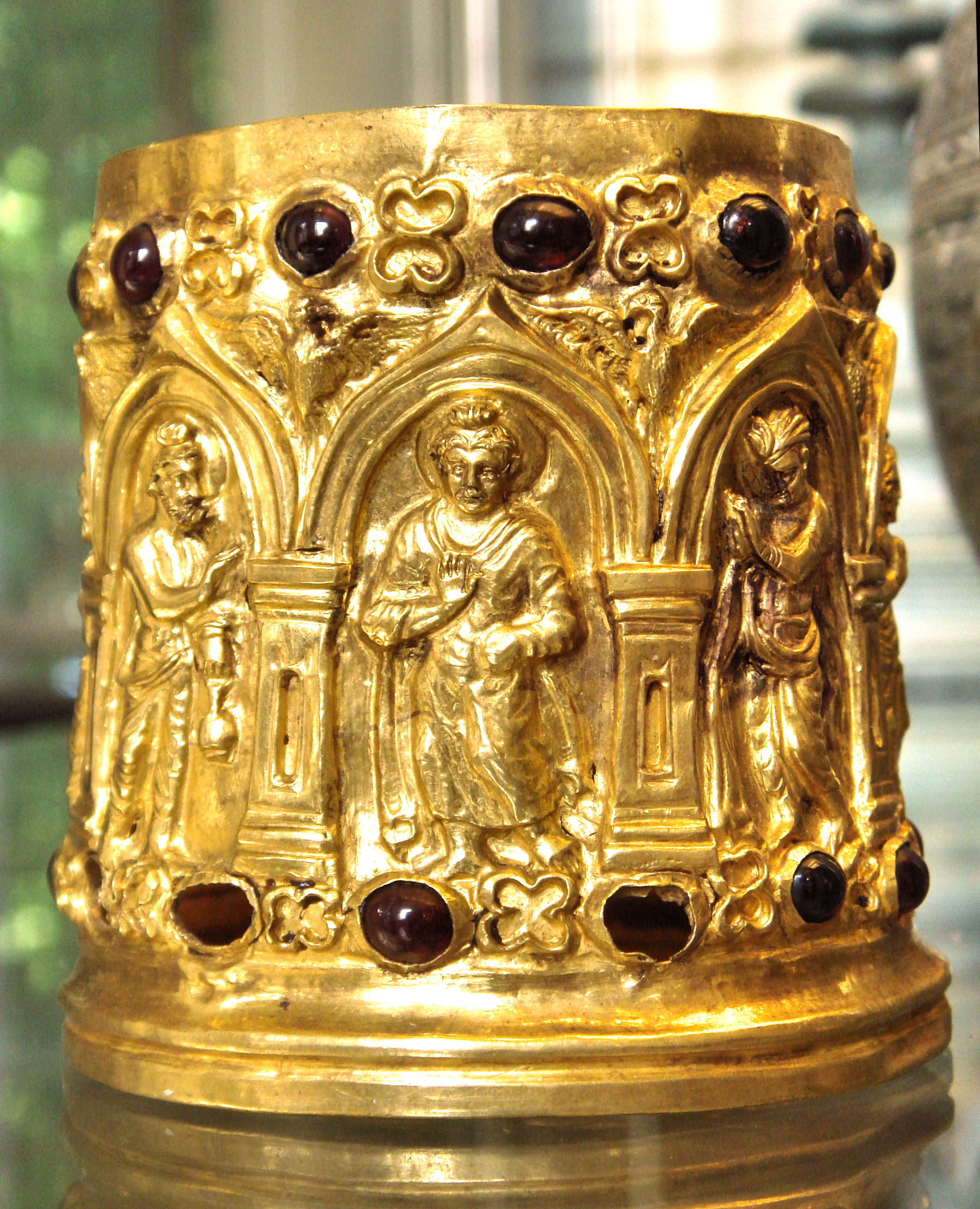 |
| Bimaran Casket, Jalalabad, Afghanistan. c. 2 CE, Gold and Ruby. Image from Wikipedia. |
.jpg/800px-Naga-enthroned_Buddha_-_Beyond_Angkor_-_Cleveland_Museum_of_Art_(40887945882).jpg) |
| Cambodian Buddha with Mucalinda Naga, c. 1100 CE. Bronze. Banteay Chhmar, Cambodia. Photo from Wikipedia by Tim Evanson. |
 |
| Attack of Mara, c. 1100 CE. Illustration(?). Dunhuang, China. Photo from "The Genius of China," Robert Temple. |
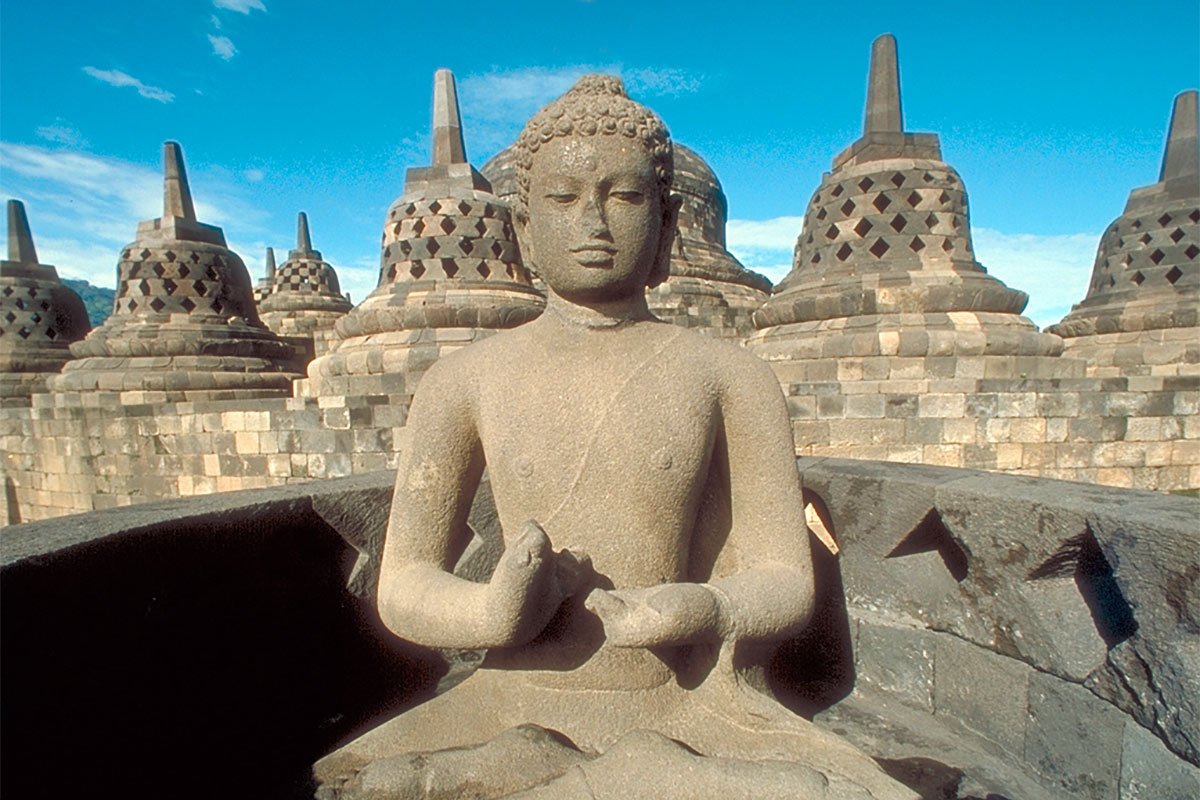 |
| Buddha Statue in One of the Uncovered Stupas, c. 7 CE. Magelang, Indonesia. Photo from World Pilgrimage Guide. |
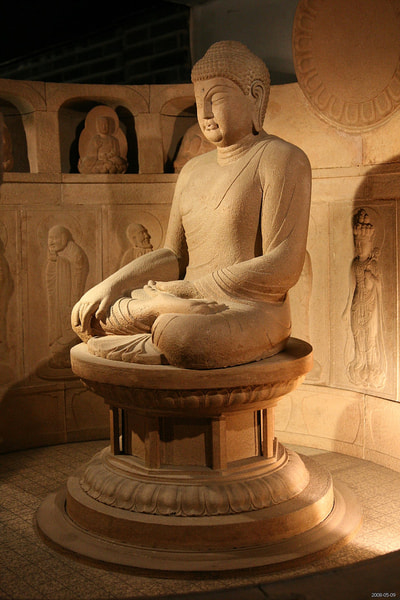 |
| Buddha Statue at Seokguram, 774 CE. Gyeongju, South Korea. Photo from World History Encyclopedia. |
Works Cited
Carus, Paul. “THE MYTHOLOGY OF BUDDHISM.” The Monist 7, no. 3 (1897): 415–45. http://www.jstor.org/stable/27897424.
Dehejia, Vidya. “On Modes of Visual Narration in Early Buddhist Art.” The Art Bulletin 72, no. 3 (1990): 374–92. https://doi.org/10.2307/3045747.
Karetzky, Patricia Eichenbaum. “Māra, Buddhist Deity of Death and Desire.” East and West 32, no. 1/4 (1982): 75–92. http://www.jstor.org/stable/29756628.


Comments
Post a Comment